
CNC Vertical Machining Center EV Series
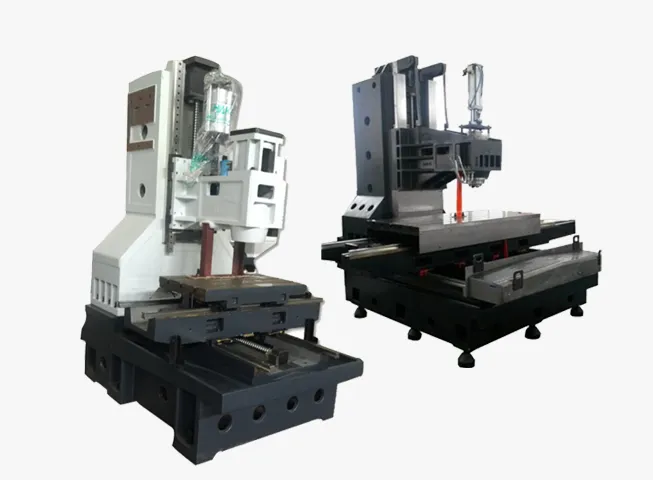
The HIRUNG EV Series is a range of CNC vertical machining centers designed for precision milling, drilling, tapping, boring and multi-process machining.
With X-axis travel covering approximately 600 mm to 1800 mm, the EV Series provides machine sizes for compact parts, medium-sized production workpieces and larger components.
Depending on the selected model and configuration, EV Series machines can be equipped with different spindle speeds, spindle tapers, tool magazines, CNC control systems, chip management systems and rotary-axis solutions.
Instead of selecting a VMC only by machine size, HIRUNG can recommend a configuration according to your workpiece dimensions, required machining processes, fixture space, accuracy and production requirements.

Choose the Right EV Series Vertical Machining Center
The EV Series covers different machining envelopes, table capacities and spindle configurations for different production requirements.

EV640L / EV855L
These models are suitable for small to medium-sized workpieces where compact machine size, fast movement and efficient machining are important.
Typical applications can include:
- Precision machined components
- Small plates and housings
- Fixtures
- Tooling components
- Small mold components
- Repeated production parts
The EV640L and EV855L provide compact VMC solutions while maintaining the basic structure and automatic machining functions required for production use.

EV1060L / EV1165L / EV1270L / EV1370L
These models provide larger X/Y/Z travel and table capacity for manufacturers machining medium-sized workpieces.
They are suitable when production requires a balance of:
- Larger machining envelope
- Increased table capacity
- Stable cutting performance
- Multi-operation machining
- More fixture space
These models provide greater flexibility for general machining, mold work, fixtures and industrial components.

EV1580 / EV1890
For larger and heavier components, the EV1580 and EV1890 provide increased axis travel and table capacity. According to the documented EV Series parameter range, the larger machines extend X-axis travel up to 1800 mm and table load capacity up to 2000 kg, providing additional machining space for larger fixtures and workpieces.
How to Choose a CNC Vertical Machining Center
The right CNC vertical machining center should match the actual workpiece and machining process rather than simply providing the largest possible travel.
X / Y / Z Axis Travel
Start with the maximum workpiece dimensions and the actual machining area required. The machine travel should also provide sufficient room for:
- Fixtures
- Vises
- Tool clearance
- Rotary tables
- Multiple-part setups
Table Size and Load Capacity
Machine travel alone does not determine whether a VMC can handle the workpiece. Check both the table dimensions and maximum table load, especially when machining:
- Larger fixtures
- Mold plates
- Multiple parts in one setup
- Heavy workpieces
Accuracy and Production Requirements
For precision and repeated production, machine selection should also consider:
- Positioning performance
- Repeatability
- Machine rigidity
- Thermal stability
- Fixture design
- Tooling strategy
Spindle Speed and Cutting Requirement
Different machining processes require different spindle characteristics.
Higher-speed spindle configurations can support applications where cutting speed and finishing performance are important, while heavier cutting places greater emphasis on spindle power, torque and machine rigidity.
4-Axis or 5-Axis Requirement
If a workpiece requires machining on multiple faces, angled features or complex surfaces, a rotary table can reduce repeated repositioning.
Selected EV Series machines can be configured with 4-axis or 5-axis rotary tables, depending on machine size and workpiece requirements.
Tool Capacity
Parts requiring several milling, drilling, tapping and boring operations benefit from an automatic tool changer that reduces manual tool changes between processes.
Not Sure Which EV Model Fits Your Workpiece?
Part Drawing + Workpiece Size + Weight + Material + Tolerance + Required Operations
High-Rigidity Machine Structure for Stable Machining
The EV series adopts a heavy-duty, ribbed one-piece casting structure with a fully box-type column and oversized precision linear guideways, ensuring exceptional rigidity and vibration damping. This rigid foundation delivers consistent geometric accuracy, fine surface finishes, and reliable long-term machining stability even under heavy cutting conditions.
FEM-Optimized Base and Column Design
The machine base, column and spindle structure are designed around rigidity and deformation control.
Documented EV Series structural features include:
- Broad machine base for stable table movement
- Reinforced spindle-box and column connection
- Large column-to-base contact area
- Structural FEM analysis
- Cast structure designed for stable load distribution
The documented column-to-base structure uses an extended contact design to improve rigidity during Z-axis movement.
FC30 Precision Cast Machine Structure
HIRUNG EV Series documentation specifies the use of FC30 precision cast iron together with FEM structural analysis and controlled heat-treatment processes.
The casting process includes:
Casting → Tempering Treatment → Rough Machining → Precision Machining → Finish Machining
Controlled heat treatment and annealing are used to help release internal stresses in the casting and improve long-term structural stability.
Linear Guideway System
Selected EV L-Series configurations use three-axis precision linear guideways.
HIRUNG documentation specifies Japanese THK or equivalent-level linear guideways on applicable configurations.
Depending on model, rapid feed rates can reach up to 48 m/min on selected EV Series machines.
Automatic Lubrication System
The EV Series uses an automatic lubrication system to supply controlled lubrication to guideway and motion components.
The documented system uses a volumetric distributor to provide measured lubrication and reduce unnecessary oil consumption.
Spindle Options for Different Machining Requirements
The spindle is one of the most important components affecting cutting performance, machining efficiency and surface quality.
Belt, Direct and Built-In Spindle Options
Depending on the machine model and machining requirement, documented EV Series spindle configurations include:
- Belt-type spindle
- Direct-drive spindle
- Built-in electric spindle
Available documented spindle speeds include configurations such as:
8,000 rpm / 12,000 rpm / 15,000 rpm / up to 24,000 rpm
Final spindle availability depends on the selected EV model and machine configuration.
Spindle Taper Options
Depending on the EV model and spindle configuration, documented spindle taper options include:
- BT40
- BBT40
- HSK-A63
- BT50 on larger machine configurations
The correct spindle taper should be selected according to machining load, tool size and required spindle performance.
Precision Spindle Bearing Configuration
Selected EV spindle configurations use P4 Japanese NSK precision bearings.
HIRUNG documentation specifies a spindle control/deviation value within 0.003 mm for the documented spindle configuration.
Through-Spindle Coolant
For machining processes requiring coolant delivery directly through the tool, the EV Series documentation includes through-spindle coolant configurations of:
24 bar / 30 bar / 45 bar / 60 bar
This option can support chip evacuation and cooling during deeper drilling and other demanding machining operations.
Tool Changing and Chip Management
for Production Efficiency
24-Tool Arm-Type Automatic Tool Changer
The EV Series uses an automatic tool magazine to support multi-process machining.
The documented standard configuration uses a 24-tool arm-type tool magazine.
Documented tool-change performance includes:
- Standard tool-change time: approximately 1.8 seconds
- Fast configuration: approximately 1.3 seconds
- Optional tool magazine: up to 32 tools on applicable configurations
A larger tool capacity allows multiple milling, drilling, tapping and boring operations to be completed within one CNC program.
Flexible Chip Removal Systems
Different workpieces and materials generate different chip shapes and chip volumes. The EV Series documentation includes multiple chip-removal configurations:
- Screw-type chip conveyor
- Scraper-type chip conveyor
- Hinge-type chip conveyor
- Magnetic filtration
- Compound chip-removal systems
Different discharge directions can also be configured according to workshop layout.
Chip-Flow-Oriented Machine Structure
The EV Series machine structure is designed to help chips move away from the machining area and reduce chip accumulation around the worktable and machining zone.
Machine Inspection and Machining
Performance Verification
HIRUNG evaluates machine performance using both geometric inspection and actual machining tests.
Laser Pitch Compensation
Laser measurement is used to inspect and compensate machine-axis positioning performance before delivery.
Ball Bar Circular Precision Testing
Ball bar testing is used to evaluate circular interpolation and axis movement performance. This helps identify motion-related errors that may affect actual machining accuracy.
Rigid Tapping Test
Rigid tapping tests are used to verify synchronized spindle and feed performance during tapping operations.
Heavy Cutting Test
HIRUNG documentation includes heavy-cutting tests to evaluate machine rigidity and cutting stability under higher machining loads.
Face Milling Test
Face-cutting tests are used to evaluate machining stability and surface performance across larger cutting areas.
Reference Test Workpieces
Actual machined test blocks and workpieces are used to evaluate machine performance under real cutting conditions rather than relying only on specification-sheet values.
4-Axis and 5-Axis Machining Options
Selected EV Series vertical machining centers can be integrated with rotary tables for multi-face and complex-part machining.
RTCP Support
HIRUNG documentation also includes CNC configurations supporting RTCP – Rotated Tool Center Point for suitable 5-axis applications.
RTCP can simplify tool-center control when machining complex surfaces and angled features.
4-Axis Rotary Table
A 4-axis rotary table can reduce repeated manual repositioning when multiple sides of a component need to be machined.
Typical operations can include:
- Indexing
- Multi-face drilling
- Milling around cylindrical components
- Repeated angular positioning
5-Axis Rotary Table
Selected EV Series machines can be configured with 5-axis working tables for more complex machining requirements.
The product documentation includes EV Series installations with different rotary-table sizes matched to different machining envelopes.
Typical applications include:
- Multi-face machining
- Complex contours
- Angled drilling
- Mold components
- Precision parts requiring fewer setups
EV Series CNC Vertical Machining Center
Technical Specifications
Compare EV Series machines according to your workpiece size and machining requirements.
| Item | unit | EV640L | EV855L | EV1060L | EV1165L | EV1270L | EV1370L | EV1580 | EV1890 |
| X/Y/Z-axis travel | mm | 600/400/450 | 800/550/550 | 1000/600/600 | 1100/650/600 | 1200/700/700 | 1300/750/700 | 1500/800/700 | 1800/900/800 |
| Table size | mm | 420*700 | 550*1000 | 600*1300 | 660*1200 | 700*1360 | 700*1400 | 800*1700 | 900*2000 |
| Max. table load | KG | 350 | 600 | 1000 | 1000 | 1400 | 1400 | 2000 | 2000 |
| BT-Type | BT40 | BT40/50 | BT50(OPBT40) | ||||||
| Spindle max. speed | rpm | 12000 | 12000 | 10000 | 6000 | ||||
| Spindle power | KW | 7.5/11 | 11/15 | 11/15(op15/18.5) | 15/18.5 | ||||
| Cutting feed rate | mm/min | 0-20000 | 0-10000 | 0-8000 | |||||
| Rapid feed rate | m/min | 48*48*36 | L:48*48*36 M:20*20*15 | L:36*36*30 M:20*20*15 | L:36*36*30 | L:30*30*24 M:20*20*15 | 30*30*24M | X/Y:16 Z:14 | X/Y:16 Z:14 |
| Net weight | KG | 4500 | 5800 | 6500 | 6800 | 7500 | 8000 | 12000 | 15500 |
| NC System | MITSUBISHI M80B/ SIEMENS 828D / FANUC OiMF | Economical:EV640LE/850LE GSK25i) | |||||||
Which VMC Specifications Matter Most?
Axis Travel
Determines the usable machining range.
Table Size
Determines the practical workholding area.
Maximum Table Load
Important for heavy workpieces and fixtures.
Spindle Speed and Power
Should match the expected cutting process and tooling.
Rapid Feed Rate
Affects non-cutting movement and cycle efficiency.
Tool Capacity
Determines how many operations can be completed without manual tool changes.
Machine Weight and Structure
Relevant when evaluating rigidity and machine installation requirements.
Need Help Comparing EV Series Models?
Part Drawing + Workpiece Size + Weight + Tolerance + Production Requirements
Standard and Optional VMC Configurations
Standard Equipment
Depending on model, standard EV Series equipment can include:
- Full splash guard
- Direct-type spindle on applicable models
- X / Y / Z linear guideways
- Spindle ring-spray cooling
- Precision ball screws
- Cutting coolant system
- Central automatic lubrication
- Air blast through spindle
- Electrical cabinet heat exchanger
- Manual pulse generator
- RS232C interface
- Working light
- Machine status indicator
- Automatic power-off function
- Basic toolbox
- Leveling bolts and blocks
- 24-tool arm-type tool magazine
Optional Equipment
Available documented options include:
- Spindle oil cooling
- RTCP support for suitable 5-axis configurations
- Electrical cabinet air conditioner
- Oil-water separation
- Oil mist collection
- RENISHAW OMP50 workpiece measurement
- RENISHAW TS27 tool measurement
- 4-axis rotary table
- 5-axis rotary table
- Automatic door
- Chip conveyor
- Optical scale
- Through-spindle coolant
Final equipment availability depends on the selected EV model and project configuration.
CNC Vertical Machining Center Price
There is no single vertical machining center price that applies to every machining requirement.
The final quotation depends on the selected machine size, spindle, CNC control system and optional equipment.
Machine Size and Travel
Larger X/Y/Z travel, worktable size and table load capacity require a different machine platform.
Spindle Configuration
Spindle speed, drive type, taper, power and coolant configuration affect both machining capability and machine cost.
4-Axis and 5-Axis Configuration
Adding rotary tables, RTCP functions and additional measurement systems changes both machine capability and project cost.
CNC Control System
EV Series machines can be configured with CNC control systems according to machine model and project requirements.
Documented control options include:
- Mitsubishi
- Siemens
- FANUC
- GSK on selected economical configurations
Measurement and Automation Options
Options such as:
- Workpiece probing
- Tool measurement
- Automatic doors
- Optical scales
- Chip conveyors
can also affect the final quotation.
Shipping and Installation Requirements
Machine size, weight, voltage, destination and packaging requirements can influence the final project cost.
Get a CNC Vertical Machining Center Quote
Part Drawing + Workpiece Size + Weight + Required Accuracy + Machining Process + Production Quantity
HIRUNG can recommend a suitable machine configuration before preparing your quotation.
HIRUNG Quality and Technical Support
Spare Parts Support
HIRUNG maintains spare-parts support resources for machine maintenance and replacement requirements.
Spindle Service Capability
The documented service system includes spindle maintenance and remanufacturing capability to support long-term machine operation.
Remote and Technical Support
HIRUNG documentation describes a service process covering:
Problem Inquiry → Remote Diagnosis → Parts / Service Arrangement → Malfunction Solution
Quality Management
HIRUNG documentation includes:
- CE-related product compliance certification
- ISO 9001 quality management system certification
CNC Vertical Machining Center FAQ
A CNC vertical machining center is a CNC machine with a vertically oriented spindle. It can perform milling, drilling, tapping, boring and other machining operations using programmed axis movement and automatic tool changing.
Start with your workpiece dimensions, weight, fixture size and machining operations.
Then compare these requirements with:
- X/Y/Z travel
- Table size
- Table load
- Spindle configuration
- Tool capacity
- Required rotary-axis functions
The main differences are machining travel, table size, table load, spindle configuration, feed rate and machine weight.
Smaller models are suitable for more compact workpieces, while larger EV models provide more machining space and load capacity.
Spindle speed depends on the selected EV model and spindle configuration.
HIRUNG documentation includes belt-type, direct-drive and built-in spindle configurations with different spindle-speed ranges.
Yes. Suitable EV Series configurations can be equipped with a 4-axis rotary table according to workpiece dimensions and machining requirements.
Selected EV Series machines can be integrated with 5-axis rotary tables and suitable CNC functions for multi-axis machining.
The exact machine and rotary-table combination should be selected according to workpiece size and machining range.
The documented EV Series configuration includes a 24-tool arm-type automatic tool changer, with additional tool-magazine configurations available on applicable machines.
For faster machine selection, provide:
- Part drawing
- Workpiece dimensions
- Workpiece weight
- Required tolerance
- Machining operations
- Material
- Production quantity
- Required rotary-axis configuration
- Destination
HIRUNG documentation includes laser pitch compensation, ball bar circular testing and actual machining tests such as heavy cutting, face cutting and rigid tapping as part of machine verification.